
That first step out of bed in the morning can feel like stepping on broken glass. If you have plantar fasciitis, you already know what that means — sharp, stabbing heel pain that starts the moment your foot hits the floor. It’s one of the most common causes of heel pain in the United States, affecting roughly 2 million people each year, according to the American Academy of Orthopaedic Surgeons. And despite how common it is, it can be frustratingly slow to heal.
The good news? There’s more than one way to address it. Patients in the San Fernando Valley are increasingly turning to chiropractic care for non-invasive solutions — and one approach, in particular, is gaining serious attention for plantar fasciitis: cold laser therapy. If you’ve been wondering whether it actually works, this blog breaks it down honestly.
What Is Plantar Fasciitis?
The plantar fascia is a thick band of tissue that runs along the bottom of your foot, connecting your heel bone to your toes. When that tissue becomes inflamed from overuse, poor footwear, tight calf muscles, or prolonged standing, the result is plantar fasciitis. The pain is worst with the first steps in the morning or after long periods of rest, then gradually eases as the foot warms up.
What makes it stubborn is that the plantar fascia has a poor blood supply compared to muscle tissue. That limited circulation slows natural healing. Traditional treatments like rest, stretching, orthotics, and anti-inflammatory medications can help, but many patients plateau — weeks turn into months, and the pain lingers. That’s when it makes sense to look at treatment options that work differently.
Cold Laser Therapy: How It Works on the Tissue Level
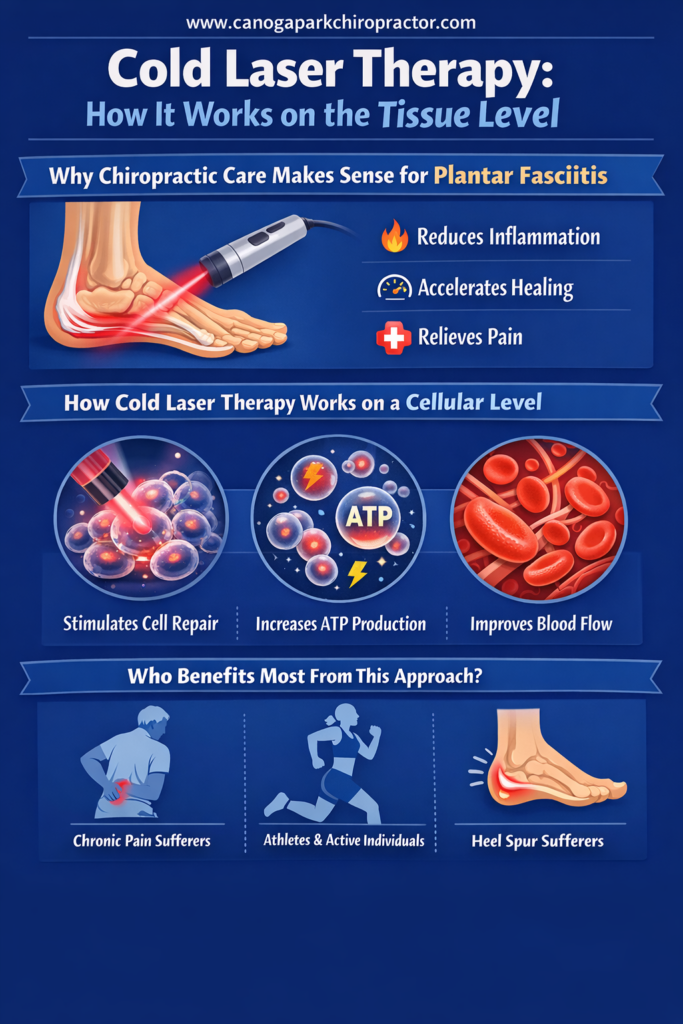
Cold laser therapy, also called low-level laser therapy (LLLT) or photobiomodulation, uses light at fixed wavelengths to penetrate the skin and soft tissues without generating heat or causing damage. The cold laser therapy at Canoga Park Chiropractor uses this technology to stimulate cellular repair directly within the inflamed plantar fascia tissue.
Here’s what’s happening at the cellular level: the light energy is absorbed by the mitochondria (the powerhouses inside your cells) and converted into ATP (adenosine triphosphate), the fuel your body uses for cellular repair. This process accelerates tissue regeneration, reduces inflammation, and improves local circulation. In short, it gives your body a more efficient path to healing.
A 2019 review published in the journal Photobiomodulation, Photomedicine, and Laser Surgery found that low-level laser therapy significantly reduced pain and improved function in patients with plantar fasciitis compared to control groups. The therapy is non-invasive, painless, and requires no recovery time, which matters a lot when you’re already managing a condition that limits how much you can move.
What a Session Looks Like
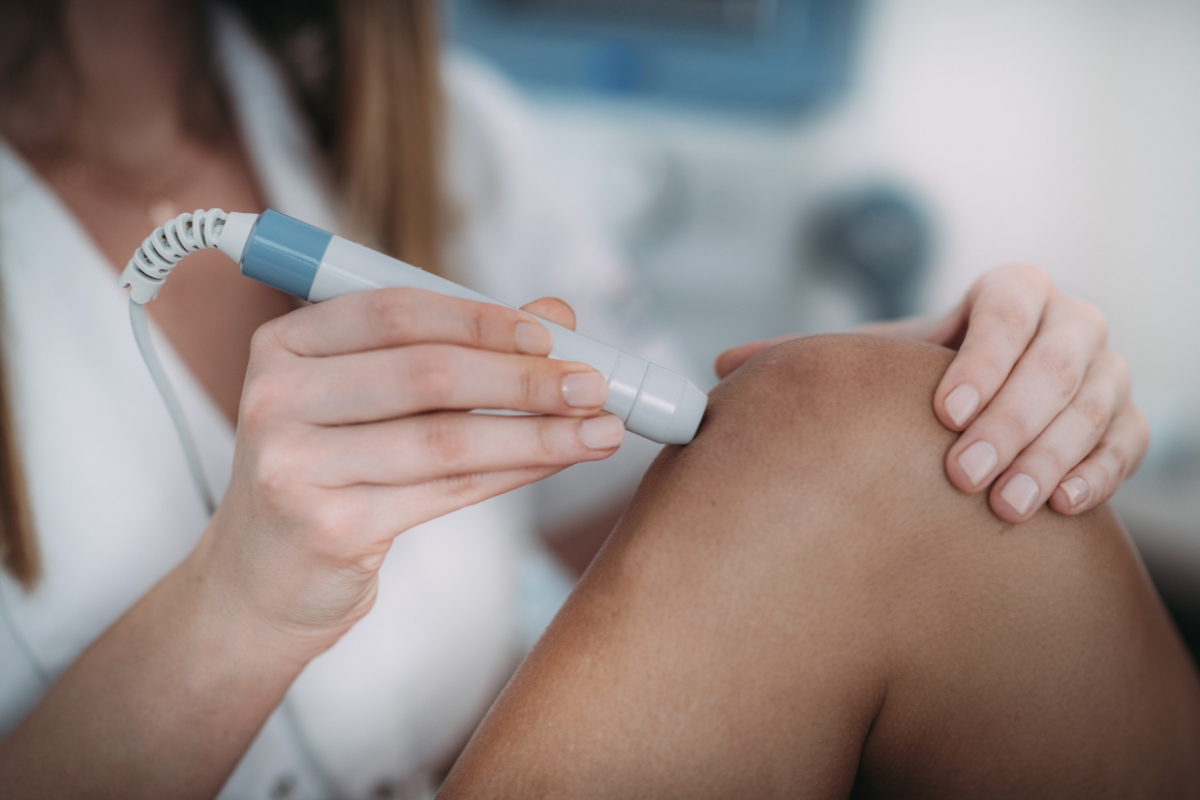
Sessions are straightforward and take only a few minutes. A handheld device is applied directly to the heel and arch of the foot. You won’t feel heat, and there’s no discomfort during treatment. Most patients describe it simply as a light sensation or nothing at all. Depending on the severity of your condition, a chiropractor may recommend a series of sessions over several weeks, often combined with other therapies for the best results.
Why Chiropractic Care Makes Sense for Plantar Fasciitis
Plantar fasciitis is rarely just a foot problem. It’s often connected to how your entire lower kinetic chain (your ankles, knees, hips, and even your lower back) functions. A chiropractor doesn’t just address the site of pain; they look at what’s contributing to it biomechanically. Poor gait mechanics, ankle joint misalignment, or restricted hip movement can place excessive load on the plantar fascia.
At Canoga Park Chiropractor, the approach to plantar fasciitis typically integrates cold laser therapy, soft-tissue therapy, chiropractic adjustments, and rehabilitative stretching exercises. Addressing both the inflammation and the underlying biomechanical issues tends to produce more durable results than treating one without the other.
Who Benefits Most From This Approach?
Cold laser combined with chiropractic care tends to work well for patients who:
- Have been dealing with plantar fasciitis for more than four to six weeks, with limited improvement
- Want to avoid cortisone injections or surgery
- Need to stay on their feet for work or daily life during treatment
- Are athletes or active individuals who want to return to full activity sooner
- Have tried rest and stretching, but keep hitting a plateau
What the Research Says
Cold laser therapy has a growing body of clinical support. Beyond plantar fasciitis-specific research, the broader evidence base for photobiomodulation in musculoskeletal pain is well established. A recent study found that LLLT significantly reduced pain in soft-tissue conditions. The FDA has cleared several cold laser devices for use in the United States, and the treatment is endorsed by several physical therapy and chiropractic professional organizations.
It’s worth being clear: cold laser therapy is not a magic fix, and no ethical practitioner will promise instant results. For most patients, meaningful improvement comes with consistency — attending a recommended course of sessions and supporting treatment with appropriate home care. But for people who haven’t responded well to conventional approaches, it offers a legitimate, evidence-backed alternative worth considering.
How Cold Laser Compares to Other Common Treatments
It helps to understand how this therapy fits into the broader treatment landscape:
- Rest and stretching: Effective for mild cases, but passive. Does not directly address cellular repair or improved circulation.
- Orthotics: Reduce strain on the plantar fascia, but do not treat existing inflammation.
- Cortisone injections: Fast-acting but carry risks with repeated use and don’t promote tissue repair.
- Shockwave therapy: Also evidence-based, though more uncomfortable and typically requires fewer total sessions.
- Cold laser therapy: Painless, non-invasive, tissue-repairing, and can be combined with other treatments without interference.
What to Expect at Canoga Park Chiropractor
Your first visit will start with a thorough assessment. This isn’t just about your heel — it includes evaluating your gait, ankle mobility, foot arch, and any contributing factors from your hip or lower back. From there, a treatment plan is built around your specific presentation. If cold laser therapy is appropriate for your case, it will likely be incorporated alongside other evidence-based chiropractic techniques.
Patients who are consistent with their care often report meaningful improvements in pain levels within a few weeks. Some notice a reduction in morning stiffness and heel pain after the first handful of sessions, while others with more chronic cases need a longer course of treatment. Either way, the goal remains the same: getting you back to walking, working, and doing what you need to do without pain dictating your day.
Plantar fasciitis can make every step feel like a setback. But it doesn’t have to stay that way. If you’ve been managing heel pain on your own or if conventional treatments have left you frustrated, it may be time to try a more targeted approach. Cold laser therapy, delivered as part of a comprehensive chiropractic care plan, addresses the root cause rather than merely masking symptoms.
Canoga Park Chiropractor is right here in the neighborhood, ready to help you get back on your feet. Schedule your consultation today and find out whether cold laser therapy is the right fit for your recovery. The sooner you start, the sooner you feel the difference.
People Also Ask
How many cold laser therapy sessions are needed for plantar fasciitis?
Most patients require between six and twelve sessions, depending on how chronic the condition is and how their body responds. Acute cases with recent onset may improve more quickly, while long-standing plantar fasciitis usually requires a longer course of care. Your chiropractor will reassess progress throughout and adjust the plan accordingly.
Is cold laser therapy safe for everyone with plantar fasciitis?
Cold laser therapy is considered safe for most patients. It is not recommended for use directly over cancerous lesions, during pregnancy over the abdomen, or for individuals with certain light-sensitive conditions. A thorough intake evaluation at the clinic will screen for any contraindications before treatment begins.
Can I continue walking and working while undergoing treatment?
Yes, in most cases. Cold laser therapy does not require downtime. Your chiropractor may recommend modifications to your activity level, such as limiting high-impact movement, to reduce re-aggravation while the tissue heals. Supportive footwear and specific stretches are often recommended alongside treatment to reinforce progress between sessions.
Does insurance cover cold laser therapy for plantar fasciitis?
Coverage varies widely depending on your insurance plan. Some plans cover low-level laser therapy as part of chiropractic or physical medicine benefits, while others classify it as investigational. It’s best to contact your insurer directly to check your specific coverage. The front desk at Canoga Park Chiropractor can also help you understand your options.
Are there lifestyle changes that support faster healing from plantar fasciitis?
Yes. Wearing supportive footwear consistently, even at home, is one of the most impactful changes you can make. Calf and Achilles stretching in the morning before your first steps can significantly reduce that initial stabbing pain. Maintaining a healthy weight reduces load on the fascia, and avoiding prolonged barefoot walking on hard surfaces during recovery also helps. Your chiropractor can walk you through a personalized home care routine based on your specific presentation.